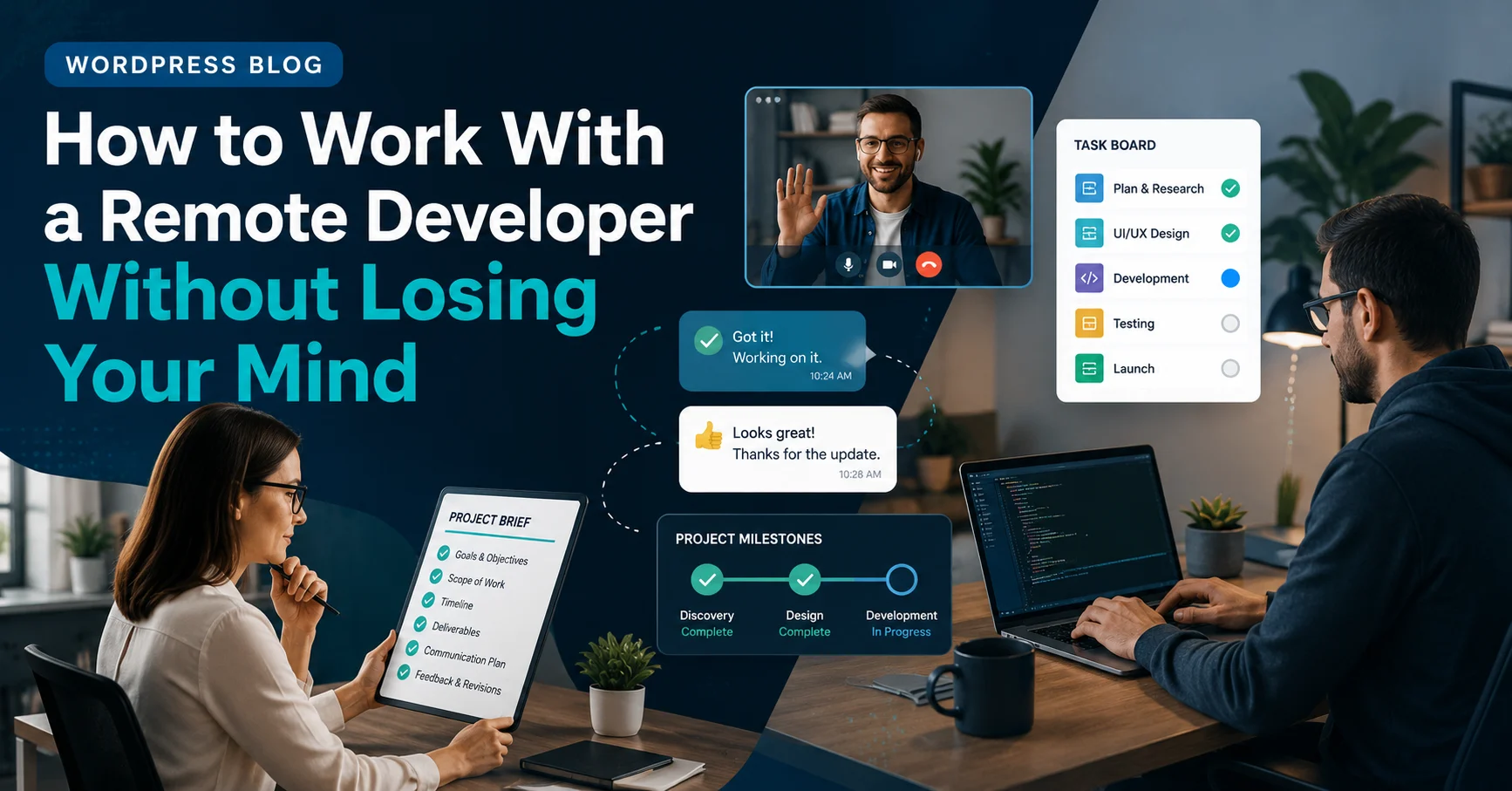
Working with a remote developer for the first time can feel like sending a message in a bottle. You explain what you need, wait, and hope what comes back resembles what you had in mind. When it does not, the frustration is real and the instinct is usually to blame the developer.
Sometimes that is fair. But more often the problem started earlier, in how the project was set up and communicated from the beginning.
Here is what actually makes remote developer relationships work.
Write down what you want before any conversation happens
The biggest source of misaligned expectations is a brief that exists only in your head. What seems obvious to you is not obvious to someone who has never seen your business before. Before you contact a developer, write down what you need, what it should do, who will use it, and what success looks like.
You do not need a formal document. You need enough clarity that a stranger could read it and understand what you are trying to build. That exercise alone will save hours of back-and-forth later.
Agree on how you will communicate before work starts
Different developers work differently. Some prefer async communication over email or a project management tool. Others are comfortable with regular video calls. Neither is wrong, but you need to agree on it upfront rather than discovering mid-project that your expectations do not match.
Agree on response time expectations too. If you expect answers within two hours and the developer works across a different time zone, that conversation needs to happen on day one.
Give feedback on deliverables, not on the process
When you hire a remote developer, you are hiring them for their expertise. Telling them how to write the code is like hiring an architect and then dictating where every brick goes. You are paying for their judgement.
What you should absolutely do is give clear feedback on what they deliver. Does it do what you asked? Does it look right? Are there things missing? Be specific, be direct, and be prompt. Vague feedback like “it does not feel right” is hard to act on. Specific feedback like “the form should redirect to a thank you page after submission” is not.
Treat milestones seriously
Breaking a project into milestones with sign-off points is good for both sides. You get visibility into progress without needing to be involved in every decision. The developer gets clear confirmation that the work is on track before moving forward.
When a milestone is delivered, review it properly and respond within a reasonable time. Leaving deliverables unreviewed for days stalls the project just as much as a developer going quiet.
Respect working hours and focused time
A good developer needs blocks of uninterrupted time to do their best work. Sending messages throughout the day expecting instant responses is counterproductive. It fragments their attention and slows down the work you are paying for.
Batch your questions. If you have five things to ask, send them together rather than one at a time across the day. This is a small habit that makes a significant difference to how efficiently the work gets done.
What good remote collaboration actually feels like
When it works well, working with a remote developer feels like having a capable, independent team member who you check in with regularly, not someone you need to supervise. The work gets done. Problems get flagged early. Deadlines are met.
That outcome is not just about hiring the right developer. It is also about being the kind of client that a good developer can do their best work for.
If you are looking for a remote developer who communicates clearly and delivers without needing to be managed, get in touch.