A few weeks ago a potential client sent me a brief that said: “I need a website for my business, something modern, let me know your price.” That was the entire message.
I get versions of this regularly, and I understand why. Most people have never written a brief before and don’t know what a developer actually needs to give a useful quote. The problem is that a vague brief leads to a vague quote, and a vague quote usually means surprises later for both sides.
Here’s what actually helps.
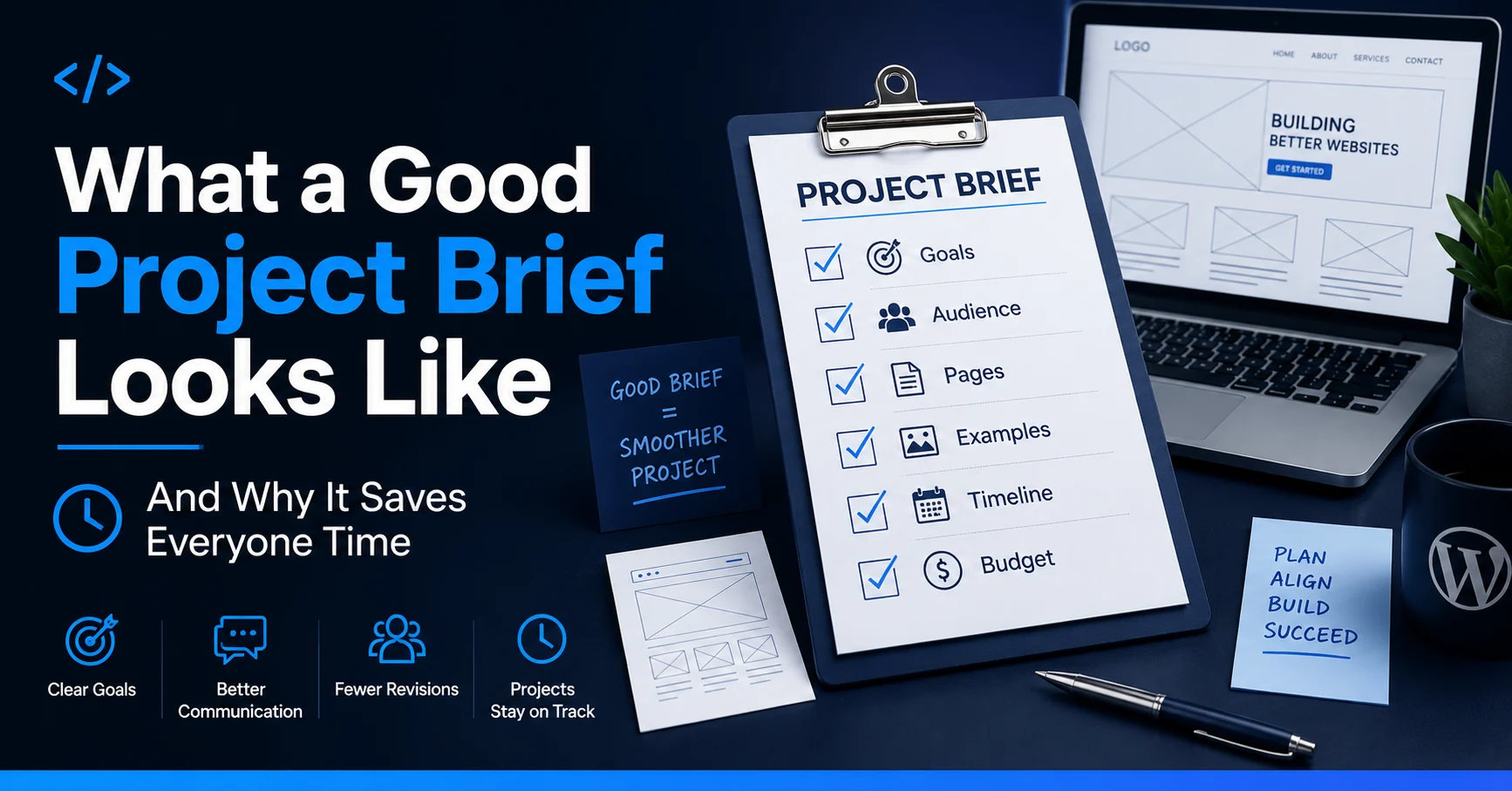
What the project needs to do
Not “a modern website.” What does it need to accomplish? Is it generating leads, selling products, providing information, booking appointments? The purpose shapes everything else, from structure to functionality to what “done” even looks like.
Who is going to use it
A site for other businesses reads differently than one for the general public. Knowing your audience changes tone, layout decisions, and sometimes the entire approach.
What pages or sections you already know you need
You don’t need a finished sitemap. Even a rough list (home, about, services, contact, maybe a blog) gives a developer something concrete to estimate against, instead of guessing at scope.
Examples of sites you like
Not for copying, but for communicating taste. “I like the layout of this one” or “the colours here feel right” says more in five seconds than paragraphs of description.
Your timeline and any hard deadlines
If you have an event, a launch date, or a deadline tied to something external, say so upfront. This affects whether a project is even feasible and how it gets planned.
Your budget range, even roughly
This is the one people hesitate on most, but it’s one of the most useful pieces of information you can give. A range tells a developer what’s realistic to propose. Without it, you’ll either get a quote based on guesswork or a generic “it depends” that doesn’t move things forward.
Why this actually saves time
None of this needs to be a formal document. A few paragraphs covering these points is enough for a developer to understand your project and give you a real answer instead of “it depends” or a number pulled from thin air.
The other benefit is that writing this down forces you to think through what you actually want, which often surfaces questions you hadn’t considered yet. Better to hit those questions before a quote than after work has started.
If you’re putting together a brief and want a second pair of eyes before sending it out, happy to take a look. And if you already have a project in mind, feel free to send over what you have, even if it’s rough. Get in touch and we’ll figure out the rest together.