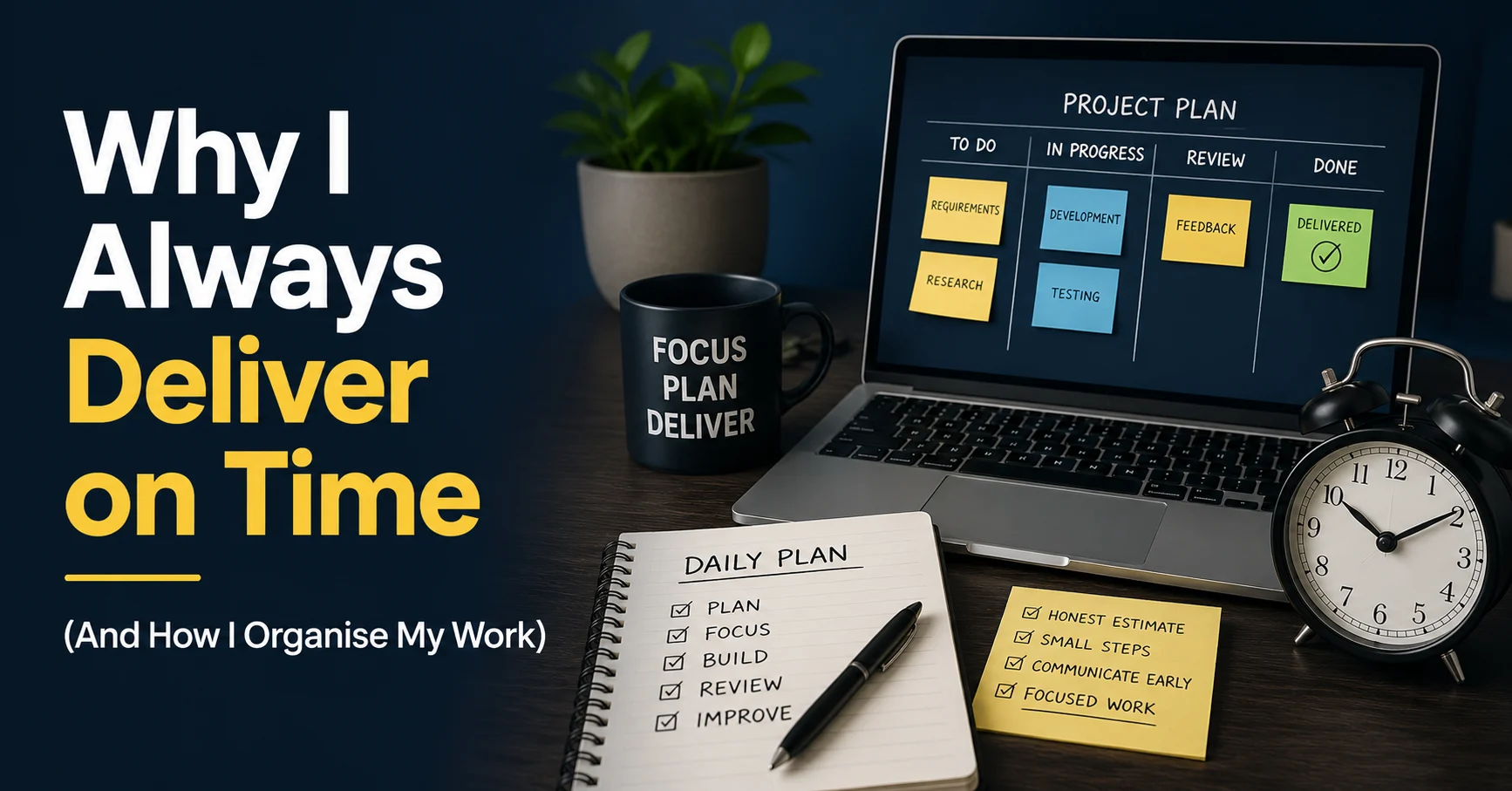
Missing a deadline is not just an inconvenience. For a client it can mean a delayed launch, a missed opportunity, or a conversation they have to have with their own client explaining why something is not ready. I take that seriously, and it is why being on time is something I treat as non-negotiable.
Here is how I actually make it happen.
Deadlines start with an honest estimate
The most common reason developers miss deadlines is that they agreed to one they could not realistically meet. Either they underestimated the work, overestimated their availability, or said yes because they felt they had to.
When I take on a project, I spend time properly scoping it before giving a timeline. I look at the requirements, think through the edge cases, and account for the back-and-forth that always happens during a project. The estimate I give is one I actually believe in, not one designed to win the work.
If something is going to take two weeks, I say two weeks. Not one week with the hope that it works out.
Breaking work into small pieces
A deadline three weeks away feels manageable right up until it does not. The way I avoid that is by breaking every project into small deliverable chunks with their own internal deadlines. Each piece has a clear definition of done, and I track progress against it daily.
This means I know early when something is taking longer than expected, which gives me time to adjust before it becomes a problem for the client.
Communication before it becomes a problem
Things come up. Requirements change. A technical problem turns out to be more complex than expected. That is normal in development work.
What is not acceptable is going quiet. If something is going to affect the timeline, I tell the client as soon as I know, not the day before the deadline. Early communication gives everyone time to adapt. Last-minute surprises do not.
Protecting focused work time
Good development work requires concentration. Context switching, constant notifications and fragmented time are the enemy of both quality and speed. I structure my days to have dedicated blocks of focused work where I am not checking messages or jumping between tasks.
This is not about being unavailable. It is about making sure that when I sit down to work on a project, I am actually moving it forward and not just feeling busy.
The result
Clients who work with me know what to expect and when to expect it. That predictability is worth a lot, especially for agencies managing multiple projects and client relationships at the same time.
If you have worked with developers who treat deadlines as suggestions, I understand the frustration. That is not how I work. Get in touch and let us talk about your next project.